
SHOULDER STABALIZATION REHAB & RETURN-TO-SPORT PROGRAM
A performance-first plan with phased progressions, objective testing, and clear return criteria.
Recovering from shoulder stabilization surgery isn’t just about protecting the joint.
It’s about restoring strength, rebuilding control, and returning to sport with a shoulder that can handle overhead speed, contact, pressing, pulling, and reactive movement.
Many athletes feel “fine” during basic strengthening, but struggle when they reintroduce higher-speed throwing, contact exposure, or heavy upper-body loading. That’s often when hesitation increases and confidence drops.
At The Lab, our shoulder stabilization rehab program is designed for athletes and active people who want more than basic physiotherapy. We use a phased return-to-sport model built around objective progress markers so you always know what you’re working toward, where you’re at, and what’s next.
WHO THIS PROGRAM IS FOR
This program is built for:
- Athletes returning to contact sports such as football, hockey, and rugby
- Overhead athletes including baseball, volleyball, and tennis players
- Court and field sport athletes
- Lifters and gym athletes
- Active adults who want to return to training safely and confidently
Whether you’re early post-op or months into rehab and feeling behind, we’ll meet you where you’re at and build the plan from there.
WHY SHOULDER STABILIZATION REHAB NEEDS A PERFORMANCE-FOCUSED APPROACH
Shoulder stabilization rehab is often treated like a protection checklist.
But return-to-sport isn’t a timeline. It’s a readiness decision.
Your shoulder has to tolerate force in multiple directions. It must manage overhead speed, absorb contact, and control deceleration at high velocity. When strength, scapular stability, and dynamic control aren’t fully restored, athletes often feel instability long before true tissue failure occurs.
That’s not failure. It’s a capacity issue.
Our approach blends progressive rotator cuff loading, scapular strength development, closed-chain control, and structured exposure to speed and contact. As you move forward, objective testing helps determine when your shoulder is truly ready for higher-demand sport environments.
The goal is simple: return to sport stronger, not just “cleared.”

WHAT TO EXPECT AT YOUR POST-OP SHOULDER ASSESSMENT
Your initial assessment at The Lab includes:
1. Injury + Surgery Review
We’ll review your surgical procedure, history of instability or dislocation, and any associated repairs.
2. Symptom + Irritability Screen
We’ll assess pain levels, stiffness, apprehension, and tolerance to daily movement so we can scale rehab properly for your current phase.
3. Movement + Strength Assessment
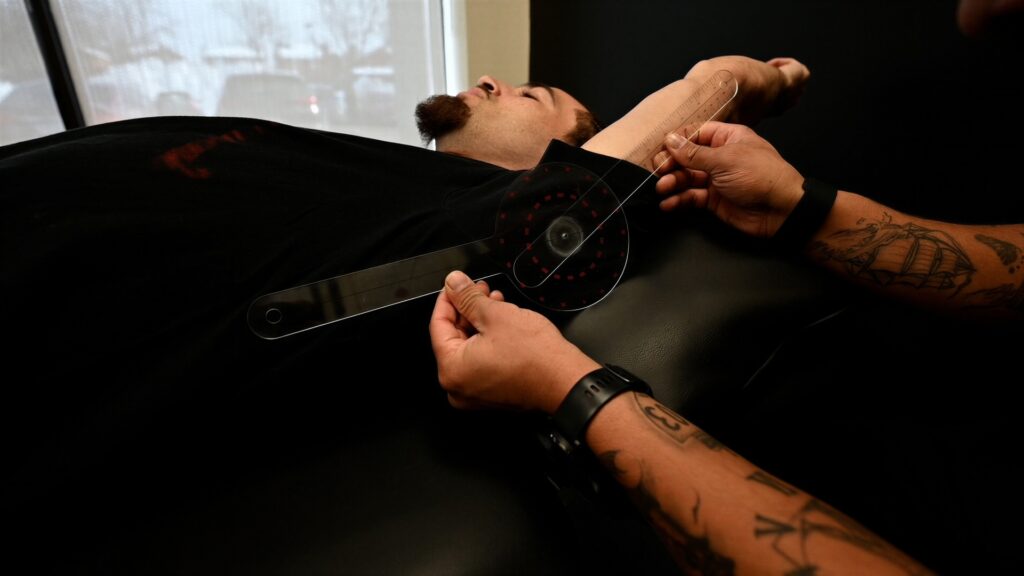
Depending on where you are post-op, we’ll assess range of motion, rotator cuff strength, scapular control, pressing and pulling mechanics, and overall upper-body loading capacity.
4. Clear Phase-Based Plan
You’ll leave with a rehab plan tailored to your current phase, clear next milestones and performance targets, a structured home or gym program, and recommendations for frequency and progression.
SHOULDER STABILIZATION REHAB:
What the process looks like
Every shoulder surgery is different, and every athlete progresses differently, but strong return-to-sport rehab generally follows a phased progression.
Phase 1: Early Recovery
In this initial stage, the priority is protecting the repaired structures while restoring safe shoulder mobility and rebuilding early muscle activation. We focus on controlled range of motion, scapular engagement, and reducing irritation. The goal is to create a stable foundation without overstressing healing tissue.
Phase 2: Strength + Movement Rebuild
As restrictions ease, the focus shifts toward rebuilding strength and confidence through progressive loading. Rotator cuff strength is developed alongside scapular stability and foundational pressing and pulling patterns. Capacity begins to rebuild in a controlled and measurable way.
Phase 3: Dynamic Stability
At this stage, we introduce greater control under movement. Closed-chain exercises, perturbation work, and deceleration mechanics challenge the shoulder’s ability to manage force in unpredictable situations. Stability must hold under speed, not just slow repetitions.
Phase 4: Power + Contact Preparation
Once strength and control benchmarks are met, we begin reintroducing higher-speed and higher-force demands. Plyometric drills, overhead speed development, and gradual contact exposure prepare the shoulder for real sport environments.
Phase 5: Return-to-Sport Testing + Clearance Support
The final phase bridges rehab and competition. Athletes progress through sport-specific drills, positional demands, fatigue exposure, and structured return-to-play progressions. Objective strength and movement testing guide decision-making to ensure readiness is based on measurable performance rather than assumption.
We’ll walk you through what each phase looks like and exactly what you should be working on right now.
RETURN-TO-SPORT TESTING (AND WHY IT MATTERS)
One of the biggest gaps in shoulder rehab is the lack of objective testing.
At The Lab, we use return-to-sport testing to help answer the questions athletes care about most:
- Am I strong enough overhead?
- Can my shoulder tolerate contact and high-speed movement?
- Is my rotator cuff strength symmetrical?
- Is my shoulder stable under fatigue?
Testing gives you clarity. It also gives your surgeon or sports medicine team better information for clearance decisions.
COMMON QUESTIONS AFTER SHOULDER STABILIZATION SURGERY
How long does shoulder stabilization recovery take?
Most athletes expect a 4–6 month timeline, but true readiness depends on strength, control, and sport demands.
When can I lift overhead again?
Overhead loading is reintroduced progressively once strength and stability benchmarks are met.
Will my shoulder feel stable again?
With progressive strength and controlled exposure to higher-demand movement, most athletes regain strong stability and confidence.
What if I’m afraid of contact or overhead movement?
Apprehension is common and treatable. We rebuild confidence through structured progression and measurable milestones.
How often do I need to come in?
This depends on your phase, goals, and schedule. Some athletes benefit from weekly coaching, others use structured progression blocks.

WHAT MAKES THE LAB DIFFERENT
Shoulder surgery physiotherapy should prepare you for sport, not just daily life.
At The Lab, our post-operative shoulder stabilization rehab is built for athletes who want:
- Clear phase-based progressions
- Objective testing and measurable milestones
- Strength and performance training integrated into rehab
- Coaching that builds confidence, not fear
- A return-to-play plan that matches the sport you actually do
We’re not here to rush you. We’re here to return you to sport ready.
Ready to Start Shoulder Rehab With a Clear Plan?
If you’ve had shoulder stabilization surgery and want a rehab plan built around performance, testing, and return-to-sport readiness, book your post-op assessment today.